


Invited Speakers
Below you will find the confirmed speakers for SoRAIM’27. Course titles and abstracts will be added once the programme is finalised.

Leveraging Multimodal LLMs for Socially Interactive Robots
Prof. Dr. Elisabeth André. University of Augsburg, Germany
Abstract: Recent advances in multimodal large language models and vision-language-action models enable socially interactive robots to link natural-language instructions with sensory inputs, interpret multimodal contexts, and adapt their behavior through interaction. How can these capabilities be leveraged while ensuring that robots behave appropriately in complex social contexts? I explore this question through three complementary challenges: (1) investigating how robots can be flexibly adapted to new tasks and social settings using natural language and low-code/no-code methods, while ensuring trustworthy and safe deployment; (2) examining how multimodal LLMs can support learning from human demonstrations and translate multimodal inputs into executable and adaptive robot behavior, so that robot assistance can be customized to users with varying abilities while preserving human autonomy; and (3) investigating how LLM-based personalization and socially adaptive behavior can account for individual users without reproducing identity-based biases, reinforcing stigmatization, or causing psychologically harmful interactions. I illustrate these challenges using interdisciplinary work on language-enabled healthcare robotics (REGINA), accessible human-robot collaboration for vocational reintegration and workplace inclusion (NORA), and robot-assisted social coaching (CAIDA).
Bio: Prof. Dr. Elisabeth André is Full Professor of Computer Science and Founding Chair of Human-Centered Artificial Intelligence at the University of Augsburg, a position she has held since 2001. Prior to joining Augsburg, she spent 13 years as a researcher at the German Research Center for Artificial Intelligence (DFKI) in Saarbrücken, where she rose to Principal Researcher. She holds a diploma and a doctorate in Computer Science from Saarland University. Her research spans multimodal human-machine interaction, embodied conversational agents, affective computing, social signal processing, and social robotics. A flagship contribution is the open-source SSI (Social Signal Interpretation) framework for recording and analysing multimodal signals — including gaze, speech, and gesture — which is now used worldwide to endow robots and virtual agents with the ability to perceive and respond to human emotions.

Frugal Robot Learning From Human Demonstration
Dr. Sylvain Calinon, Idiap Research Institute & EPFL, Switzerland
Abstract: Despite significant advances in AI, robots still struggle with tasks involving physical interaction. Robots can easily beat humans at board games such as Chess or Go but struggle to skillfully move the game pieces by themselves (the part of the task that humans subconsciously succeed in). Learning manipulation skills is both hard and fascinating because the movements and behaviors to acquire are tightly connected to our physical world and to embodied forms of intelligence.
I will present an overview of representations and learning approaches to help robots acquire manipulation skills by imitation and human-robot collaboration. I will present the advantages of targeting a frugal learning approach, where the term “frugality” has two goals: 1) learning manipulation skills from only few human demonstrations or exploration trials; and 2) learning only the components of the skill that really need to be learned.
Toward this goal, I will emphasize the roles of geometry, manifolds, implicit shape representations and distance fields as inductive biases to facilitate human-guided manipulation skill acquisition. I will also show how ergodic control can provide a mathematical framework to generate exploration and coverage movement behaviors, which can be exploited by robots as a way to cope with limited human demonstrations and/or uncertainty in sensing, proprioception and motor control.
Bio: Dr. Sylvain Calinon is a Senior Research Scientist at the Idiap Research Institute and a Lecturer at the École Polytechnique Fédérale de Lausanne (EPFL). He heads the Robot Learning & Interaction group at Idiap, with expertise in human-robot collaboration, robot learning from demonstration, geometric representations, and optimal control. The approaches developed in his group can be applied to a wide range of applications requiring prehensile and non-prehensile manipulation skills, with robots that are either close to us (assistive and industrial robots), parts of us (prosthetics and exoskeletons), or far away from us (shared control and teleoperation).

Multimodal Human Behaviour Modelling for Socially Assistive Robots
Dr. Oya Celiktutan, King’s College London, United Kingdom
Abstract: Robots are increasingly moving from research laboratories into real-world environments, where they are expected to provide companion care for older adults, support children with special needs, assist people in their daily activities, and offer services in public spaces. These applications require robots to interact naturally and effectively with humans, making robust perception, understanding, and adaptation to human behaviour essential.
Consequently, significant efforts have been devoted to advancing robots’ multimodal perception and interaction capabilities, enabling them to recognise, interpret, and respond to human actions with increasing levels of autonomy. In this talk, I will present an overview of our ongoing research on multimodal human behaviour understanding and generation for socially assistive robots.
In particular, I will highlight our work on enabling robots to comply with social norms, understand and imitate non-verbal behaviours, and explain their actions. I will conclude by discussing key challenges and open research directions in human–robot interaction.
Bio: Dr. Oya Celiktutan is a Reader in AI and Robotics in the Department of Engineering at King’s College London, where she leads the Social AI & Robotics Laboratory. She is also the Honorary Robotics Lead at Guy’s and St Thomas’ NHS Foundation Trust, working closely with two hospitals to translate socially assistive robotic technologies into clinical settings. Her research focuses on multimodal machine learning for autonomous robots and virtual agents that interact naturally with humans, including multimodal perception, human behaviour understanding and generation, and socially aware navigation and manipulation. Her work has been supported by EPSRC, The Royal Society, and the EU Horizon programme, as well as industrial partners such as Toyota Motor Europe and NVIDIA.

Multimodal Machine Learning
Prof. Louis-Philippe Morency, Carnegie Mellon University, USA
Abstract: Multimodal machine learning (MMML) is a vibrant interdisciplinary research area that advances core goals of artificial intelligence by integrating and modeling multiple communicative modalities, including language, speech, vision, and other sensory signals. Originating from early work in audio-visual speech recognition and evolving through modern language-and-vision systems such as image and video captioning, MMML addresses unique challenges arising from heterogeneous data sources and complex interdependencies between modalities.
This lecture introduces the fundamental mathematical and algorithmic concepts in machine learning and deep learning that underpin the six central challenges of multimodal machine learning: Representation, Alignment, Reasoning, Generation, Transference and Quantification. The lecture will also examine state-of-the-art probabilistic models and computational algorithms through readings of recent research literature, with attention to open problems and emerging directions in the field. Applications discussed throughout the course include multimodal affect recognition, language grounding, language-vision navigation, image and video captioning, and cross-modal multimedia retrieval.
Bio: Prof. Louis-Philippe Morency is an Associate Professor at Carnegie Mellon University’s Language Technologies Institute, where he leads the MultiComp Lab. He was formerly research faculty at the University of Southern California and received his Ph.D. from MIT’s Computer Science and Artificial Intelligence Laboratory. His research builds the computational foundations that enable computers to analyze, recognize, and predict subtle human communicative behaviors during social interactions—work that has helped shape the broader field of multimodal machine learning, with applications across health, education, and social AI. He has received numerous honors, including being named one of AI’s 10 to Watch by IEEE Intelligent Systems, the NetExplo Award in partnership with UNESCO, and more than 10 best paper awards at IEEE and ACM conferences. His research has been covered by media outlets including the Wall Street Journal, The Economist, and NPR.

Why are we still using keyboards?
Dr. Alexandre Défossez, Kyutai, Gradium, France
Abstract: In this talk I will present recent advances in the field of speech conversational AI and try to understand what separates us from using it just like in the movie Her. I’ll cover our recent efforts to make Moshi more robust and useful, while retaining a fast and natural pace even when running on device. Beyond fancy algorithms and ideas, what such models require the most is flawless execution. We will thus cover all stages of the model development: pre-training, data acquisition, synthetic data generation, fine-tuning, and reinforcement learning.
Bio: Dr. Alexandre Défossez is a co-founder of Kyutai, a non profit lab for research in artificial intelligence based in Paris committed to open science. His work covers generative speech and multimodal AI (Moshi, Hibiki, DSM) with a strong focus on handling multiple streams jointly across modalities in a streaming and low latency fashion. He is also a co-founder and Chief Science Officer at Gradium, a startup launched in 2025 whose mission is to commercialize the best possible voice AI experience. Before that, Alexandre was a scientist for 3 years at Facebook AI Research in Paris, where he led the development of models for audio compression and modeling (AudioCraft, MusicGen, EnCodec). He graduated in mathematics from École Normale Supérieure, and did his PhD between INRIA and FAIR Paris on music source separation under the supervision of Francis Bach, Nicolas Usinier et Léon Bottou.
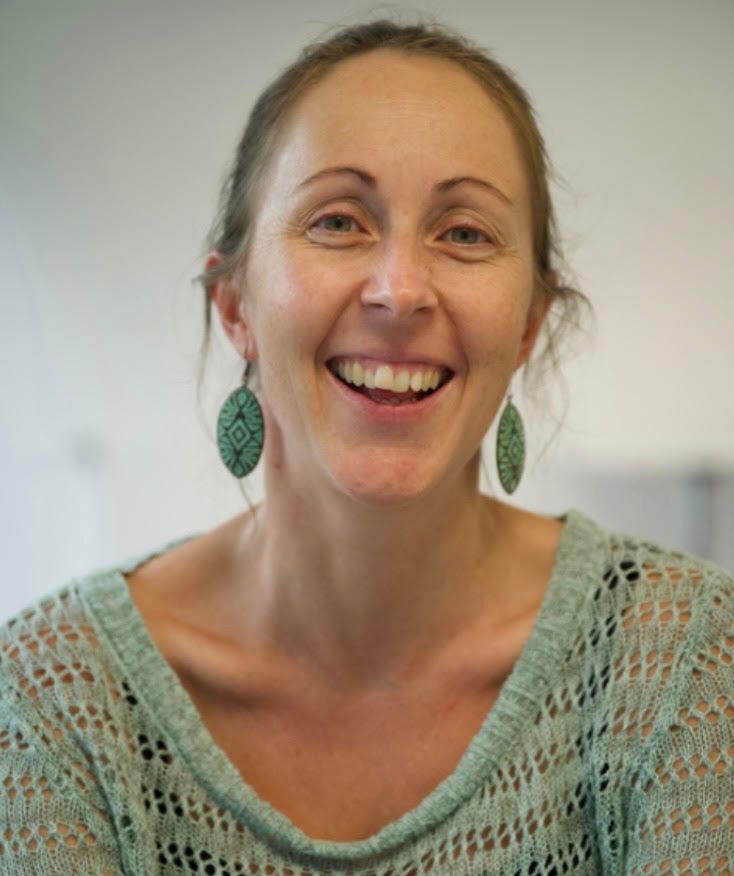
Social Robots as Learning Partners Before Age Three: Early-Intervention Potential, Developmental Constraints, and Learning Outcomes.
Prof. Mathilde Fort, University Grenoble Alpes
Abstract: This talk examines whether 3D social robots such as the Furhat can serve as effective tools for interaction and learning during the first three years of life, and under which developmental and interactional conditions they may do so. This period is of particular interest because socio-economic disparities in language and cognitive development begin to emerge before age three, while they may not yet be firmly entrenched; social robots could therefore offer new opportunities for early educational intervention (Hassinger-Das et al., 2020; Heidlage et al., 2020; Love et al., 2005; Roberts & Kaiser, 2011). Establishing their potential in this age group nevertheless requires dedicated developmental research, as infants and toddlers cannot simply be considered younger versions of preschool-aged children. Early learning depends particularly strongly on embodied, contingent, and reliable interactions through which social partners dynamically respond to children’s attentional focus and communicative signals (Goupil et al., 2024; Masek et al., 2021; Tamis-LeMonda et al., 2014; Wass et al., 2024). I will first review current research on social robotics and early learning, focusing on the conditions under which children below age three treat robots as meaningful and reliable social partners. Building on this literature, I will present two empirical studies: one examining whether infants aged 3 to 12 months follow Furhat’s gaze in a manner comparable to human gaze, and one assessing word learning and retention from Furhat in children aged 18 to 36 months. Together, these studies aim to determine from what age, and under which conditions 3D social robots may support early learning and contribute to the development of educational tools designed to address emerging inequalities.
Bio: Prof. Mathilde Fort is an Associate Professor in Developmental Psychology and Language Sciences at Université Grenoble Alpes (France), where she leads the Development and Learning research team at the Laboratoire de Psychologie et NeuroCognition. Her research focuses on the mechanisms supporting early language acquisition in interactive settings during the first three years of life. She combines experimental methods, including eye tracking, with computational modelling and social robotics to investigate learning in both typical and atypical development, including autism and prematurity. One central strand of her current work examines whether embodied social robots such as Furhat can act as reliable social and learning partners for infants and toddlers. She is also co-chair with Thomas Hueber and Laurent Girin of the MIAI DevAI&Speech Chair, which brings together developmental science, artificial intelligence, and speech technologies to model early language learning. She further develops intervention research with childcare professionals and community partners, including the City of Grenoble, to support early language development and reduce emerging socio-economic inequalities.
Fundamental Courses
Speech Processing: From Modular Pipelines to SpeechLMs
Instructors: Dr. Thomas Hueber & Dr. Olivier Perrotin
Topic area: Speech Processing
Keywords: Speech signal processing, source-filter model, neural vocoders, self-supervised learning, neural audio codecs, text-to-speech synthesis, ASR, speech tokenization, SpeechLMs, conversational AI
Summary: Builds from speech fundamentals (production/perception, source-filter model, MFCCs) through the four-step evolution of speech representations (signal-based vocoders → neural vocoders → self-supervised encoders → discrete tokenization), then applies these to interactive systems: modular ASR-LLM-TTS pipelines vs. unified multimodal SpeechLMs (SpiRitLM, Moshi, LLaMA-Omni). Historical/technical narrative where each concept motivates the next, richly illustrated with embedded audio demos.
Highlights:
- Historical overview of speech synthesis, putting the most recent techniques into context
- Unifying “4-step” voice-coding framework tying together WaveNet, HiFi-GAN, HuBERT, VQ-VAE/EnCodec
- Live audio demos: WaveNet, VALL-E/IndexTTS2 zero-shot voice cloning, Moshi full-duplex conversation
- Deep dive into a recent full-duplex 3-stream architecture
- Coverage of multimodal frontiers: speech-gesture generation, omni-style vision+audio+text models
Vision and Multimodal Learning
Instructor: Dr. Stéphane Lathuiliere
Topic area: Vision and Multimodal Learning
Keywords: self-supervised learning, contrastive learning, vision transformers, CLIP, multimodal LLMs, visual instruction tuning, human-robot interaction, foundation models, image-text alignment
Summary: Opens via human-robot interaction (detection, pose, segmentation), then surveys the shift from supervised ImageNet pretraining to self-supervised representation learning (SimCLR, DINO). Moves to multimodal representation learning centered on CLIP and its extensions (CLAP, ImageBind), then traces multimodal LLMs from Flamingo/LLaVA to Qwen2.5-Omni, closing with open challenges for MLLMs in social robotics. Example- and paper-driven with architecture diagrams and loss derivations.
Highlights:
- Step-by-step SimCLR/CLIP loss derivations plus DINO’s emergent unsupervised segmentation
- CLIP as “foundation model” with zero-shot results across 27+ datasets, extended to CLAP and ImageBind
- Architecture deep dives: Frozen → Flamingo → LLaVA (few-shot VQA to instruction-tuned agents)
- Qwen2.5-Omni streaming audio+video+text demo (live equation-sketching)
- Closing discussion of open MLLM-for-robotics challenges
Robot Navigation: From Physics to Preferences
Instructor: Dr. Xavier Alameda-Pineda
Topic area: Control and Reinforcement Learning
Keywords: robot navigation, Model Predictive Control, Q-learning, Deep Q-Networks, policy gradient, PPO, Soft Actor-Critic, RLHF, Direct Preference Optimization, GRPO.
Summary: Uses 2D robot navigation as a running example to trace the arc from classical control to modern preference alignment: (1) classical model-based control (Dynamic Window Approach, MPC), (2) value-based RL (Q-learning, DQN), (3) policy-gradient/actor-critic RL (PPO, SAC), (4) preference-based alignment (RLHF, DPO). Derivation-driven and Socratic, building each method from first principles with toy examples and a closing comparison table across all methods.
Highlights:
- Live MPC demo derived directly from the robot’s kinematics and cost function
- Gridworld walkthrough of Q-value convergence via value iteration
- Clean unifying comparison of DQN vs. SAC critics
- Full derivation of DPO showing the reward model can be eliminated entirely
- Final summary table mapping all four methods by domain, signal, model type, action space